












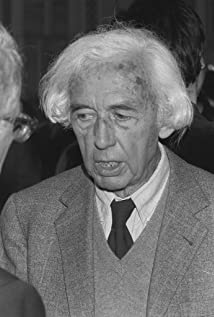
Robert Bresson
Birthday: September 25, 1901 in Bromont-Lamothe, Puy-de-Dôme, France
Height: 178 cm
Robert Bresson trained as a painter before moving into films as a screenwriter, making a short film (atypically a comedy), Affaires publiques (1934) in 1934. After spending more than a year as a Germa ...Show More
For me, film-making is combining images and sounds of real things in an order that makes them effect Show more
For me, film-making is combining images and sounds of real things in an order that makes them effective. What I disapprove of is photographing things that are not real. Sets and actors are not real. Hide
Painting taught me to make not beautiful images but necessary ones.
Painting taught me to make not beautiful images but necessary ones.
I always shoot on the dangerous line between showing too much and not showing enough. I try to work Show more
I always shoot on the dangerous line between showing too much and not showing enough. I try to work as if I were on a tightrope with a precipice at either side. Hide
Two types of films: those that employ the resources of the theater; those that employ the resources Show more
Two types of films: those that employ the resources of the theater; those that employ the resources of cinematography Hide
A film is not a spectacle; it is preeminently a style.
A film is not a spectacle; it is preeminently a style.
There are so many things our eyes don't see. But the camera sees everything. We are too clever, and Show more
There are so many things our eyes don't see. But the camera sees everything. We are too clever, and our cleverness plays us false. We should trust mainly our feelings and those senses that never lie to us. Our intelligence disturbs our proper vision of things. Hide
There is the feeling that God is everywhere, and the more I live, the more I see that in nature, in Show more
There is the feeling that God is everywhere, and the more I live, the more I see that in nature, in the country. When I see a tree, I see that God exists. I try to catch and to convey the idea that we have a soul and that the soul is in contact with God. That's the first thing I want to get in my films. Hide
I think that in other films' actors speak as if they were on stage. As a result, the audience is use Show more
I think that in other films' actors speak as if they were on stage. As a result, the audience is used to theatrical inflections. That makes my non-actors appear unique, and thus, they seem to be speaking in a single new way. I want the essence of my films to be not the words my people say or even the gestures they perform, but what these words and gestures provoke in them. What I tell them to do or say must bring to light something they had not realized they contained. The camera catches it; neither they nor I really know it before it happens. Hide
Cinema is interior movement.
Cinema is interior movement.
Cinematography: a new way of writing, therefore of feeling.
Cinematography: a new way of writing, therefore of feeling.
[When asked if he could summarize Mouchette as he saw it] No. It can't be summarized. If it could, i Show more
[When asked if he could summarize Mouchette as he saw it] No. It can't be summarized. If it could, it'd be awful. Hide
I'd rather people feel a film before understanding it. I'd rather feelings arise before intellect.
I'd rather people feel a film before understanding it. I'd rather feelings arise before intellect.
I never use the same person twice, because the second time he would try deliberately to give me what Show more
I never use the same person twice, because the second time he would try deliberately to give me what he thought I wanted. I don't even permit the husband of a non-actress to see rushes because he would evaluate her performance and then she would try to improve it. Anyway, mechanics are essential. Our gestures, nine times out of ten, are automatic. The ways you are crossing your legs and holding your head are not voluntary gestures. Montaigne has a marvelous chapter on hands in which he says that hands go where their owner does not send them. I don't want my non-actors to think of what they do. Years ago, without realizing any program, I told my non-actors, "Don't think of what you are saying or doing," and that moment was the beginning of my style. Hide
In my opinion, it's clear that music is one element that transforms a film. Let me back up a bit: I Show more
In my opinion, it's clear that music is one element that transforms a film. Let me back up a bit: I believe all the elements: image, sound - and "sound" includes sound effects, dialogue, and music - should affect and transform each other. Without transformation, it isn't art. That's why I consider today's cinema a reproduction, not a true art, because it's just a copy of another art: theater. If we want cinema to be a true, independent art, there must be transformation. An image or a sound on its own is nothing. It takes on meaning only in relationship to what transforms it. An image only matters in relation to other images, or a sound to other sound or to the image it accompanies. In my opinion - though I too made this mistake at first - music should't be used to underscore or emphasize but to transform. Therefore in Mouchette, the music used, sacred music, probably certain wonderful passages from Monteverdi's Magnificat, will be used during the hunting scene that I added. I wanted to establish a connection between the prey and Mouchette. With sacred music played during the hunting scene, you'll see an extraordinary transformation of the wild animals through Montiverdi's Music. Hide
Robert Bresson's FILMOGRAPHY
All
as Actor (1)
as Director (1)
as Creator (1)